









How to Pick Stocks Using Technical Analysis
When it comes to stock market investing, there are two dominant schools of thought: fundamental analysis and technical analysis. While fundamentals focus on company earnings, valuations, and industry outlooks, technical analysis (TA) looks at price patterns, charts, and trading signals to help identify the right time to buy or sell a stock.
For active traders and even long-term investors who want better entry and exit points, mastering technical analysis can be a game-changer. Here’s a practical guide on how to pick stocks using technical analysis in today’s markets.
1. Understand the Basics of Price Charts
The foundation of technical analysis lies in reading stock charts. The most common chart types include:
- Line charts – show a simple line connecting closing prices.
- Bar charts – display opening, closing, high, and low prices.
- Candlestick charts – the most popular among traders, offering a visual of market sentiment within each time frame.
Candlestick patterns like dojis, hammers, and engulfing candles often indicate potential reversals or continuations.
2. Identify Trends and Momentum
Stocks rarely move in straight lines; they follow trends. Recognizing these trends helps traders align with market momentum:
- Uptrend: Higher highs and higher lows.
- Downtrend: Lower highs and lower lows.
- Sideways trend: Price consolidates within a range.
Using moving averages such as the 50-day and 200-day moving averages can help spot the overall direction. A bullish signal often occurs when the 50-day crosses above the 200-day (the famous “Golden Cross”).
3. Use Support and Resistance Levels
Support and resistance are key concepts in technical analysis.
- Support: A price level where buyers step in, preventing the stock from falling further.
- Resistance: A level where selling pressure emerges, capping upward moves.
By identifying these zones, traders can anticipate potential breakout or breakdown points.
4. Apply Technical Indicators
Indicators provide additional confirmation beyond raw price action. Some widely used ones include:
- Relative Strength Index (RSI): Measures overbought (above 70) and oversold (below 30) conditions.
- MACD (Moving Average Convergence Divergence): Highlights momentum shifts and trend strength.
- Bollinger Bands: Help identify volatility and possible breakout scenarios.
- Volume Analysis: Confirms the strength of price moves — rising prices with high volume suggest strong buying pressure.
5. Look for Chart Patterns
Classic chart patterns help predict future price movements:
- Triangles (ascending/descending): Indicate continuation or reversal.
- Head and Shoulders: A bearish reversal pattern.
- Double Tops and Bottoms: Signal potential reversals at major levels.
- Flags and Pennants: Suggest continuation after strong moves.
Recognizing these formations can help traders anticipate breakouts before they happen.
6. Combine Time Frames for Better Accuracy
Traders often make the mistake of focusing only on one chart. Instead, use multiple time frames:
- Daily charts for overall trend direction.
- Hourly or 15-minute charts for entry/exit timing.
- Weekly charts for long-term confirmation.
This multi-timeframe approach reduces the chance of false signals.
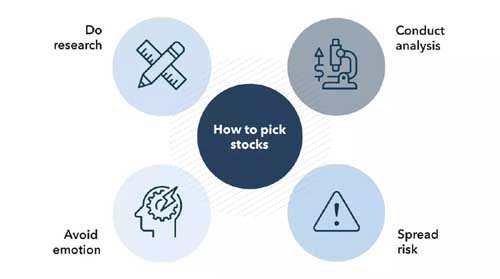
7. Manage Risk and Emotions
Even the best technical setups can fail. That’s why risk management is crucial:
- Always set stop-loss orders.
- Avoid risking more than 1–2% of your capital on a single trade.
- Don’t chase trades; let setups come to you.
Technical analysis is as much about discipline as it is about chart reading.
Final Thoughts
Picking stocks using technical analysis requires practice, patience, and consistency. By combining charts, indicators, support/resistance, and proper risk management, traders can significantly improve their decision-making and capture better opportunities in the stock market.
For beginners, start with simple tools like moving averages and RSI, then gradually expand to advanced indicators and chart patterns. Over time, you’ll develop a trading style that matches your goals and risk tolerance.