








AI-Based Stock Market Predictions: What to Expect in 2026
Introduction
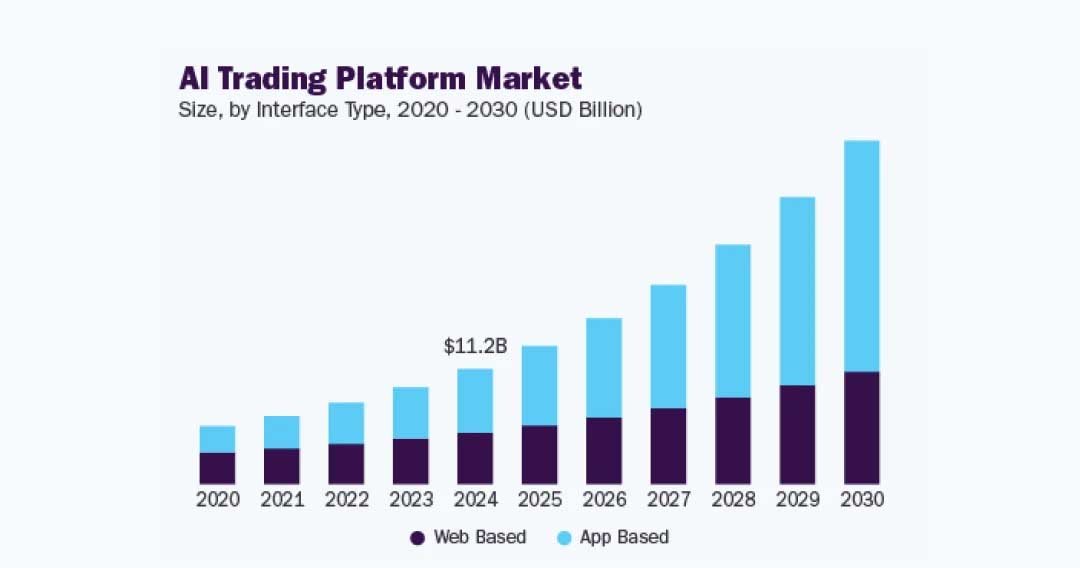
The use of artificial intelligence (AI) in financial markets has surged in recent years. From algorithmic trading and sentiment analysis to deep learning models forecasting macro trends, AI tools are already reshaping how investors make decisions. As we look toward 2026, the fusion of more advanced AI techniques and evolving market conditions suggests a new frontier in predictive finance. But with opportunity comes risk—and uncertainty.
In this article, we explore the key trends, challenges, and realistic expectations for AI-driven stock market predictions heading into 2026.
Why AI Matters More Now Than Ever
Before looking ahead, it helps to understand why AI’s role in market forecasting is intensifying:
- Data explosion & complexity
The volume, variety, and velocity of financial data—news feeds, corporate filings, alternative data (e.g. satellite, social media, web traffic)—are growing rapidly. AI and machine learning (ML) systems can ingest and interpret these diverse data streams far faster than traditional statistical models. - Advances in model architectures
Gen-AI, transformers, reinforcement learning, graph neural networks, and agentic AI are pushing the envelope. Models are becoming more adaptive, capable of reasoning, context awareness, and multi-modal input. - Infrastructure & compute scale
Cloud providers and hyperscalers are expanding AI compute capacity aggressively, enabling training of larger models and faster inference. - Institutional adoption & competitive pressure
More asset managers, hedge funds, and quant firms are embedding AI systems—not just as advisors, but as core decision engines. The cost of not exploring AI can be seen as a competitive disadvantage. - Regulatory interest & tooling maturity
Governance, explainability, and regulatory compliance tools for AI are emerging. This helps build confidence for larger scale deployment.
What 2026 May Bring: Key Trends & Shifts
Below are several likely evolutions and dynamics we can anticipate in the domain of AI-powered stock forecasting by 2026.
1. Hybrid Models & Ensembling Will Dominate
Pure “black box” models often struggle in volatile or regime-shift markets. The most resilient systems will likely blend:
- Fundamental models (balance sheet, earnings, macro indicators)
- Technical / time-series models (momentum, volatility forecasting)
- Sentiment and alternative data modules (news, social trends, IoT)
- Rule-based overlays or guardrails (risk limits, scenario checks)
Such hybrid / ensemble systems can balance adaptability with robustness, reducing overfitting and mitigating “model drift” when market regimes change.
2. Greater Use of Agentic & Self-Driving AI Agents
Agentic AI (autonomous agents capable of planning, strategizing, acting) is a rising paradigm. In the context of trading, these agents could:
- Monitor markets, simulate multiple decision paths, and execute trades automatically (within constraints).
- Self-adapt: when market conditions shift, agents adjust their own strategies via reinforcement signals or meta-learning.
- Coordinate across portfolios (e.g. sector rotation, risk diversification) in a semi-autonomous fashion.
By 2026, such systems may no longer be experimental, but part of standard infrastructure in quantitative trading firms.
3. Real-Time / Streaming Prediction Becomes Norm
Today many predictive models work on daily or even lower frequency. In 2026, we should expect:
- Millisecond to sub-second inference pipelines
- Continuous model updating (online learning)
- Event-driven triggers: e.g. sudden geopolitical news, earnings surprises, macro data releases
- Adaptive recalibration: models self-correct or re-weight features dynamically
This shift will favor architectures designed for streaming data and incremental learning.
4. Explainability, Trust, & Governance as First-Class Citizens
One of the major challenges of AI in finance is interpretability. As AI influences larger flows of capital, regulators, institutions, and investors will demand:
- Transparent attribution of predictions
- Stress testing under hypothetical regimes
- Model audit trails, versioning, and rollback capability
- Ethical limits (e.g. avoiding market manipulation, model-induced cascades)
Thus, explainable AI (XAI) and AI governance frameworks will evolve in step with predictive systems.
5. Barriers, Risks & Market Dynamics
Even with rapid progress, AI-based predictions face headwinds:
- Regime shift vulnerability: models trained in benign periods may fail under crisis or “black swan” conditions.
- Crowding & feedback loops: if many players use similar signals, profits may vanish or amplify volatility.
- Data biases and overfitting: alternative data may have hidden biases or nonstationarity.
- Compute and cost constraints: training ever-larger models is expensive; marginal returns may taper.
- Regulatory overhead: tighter oversight may slow experimentation or enforce limits on algorithmic trading.
- False confidence / misuse: overreliance on AI may lead to risky positions without human oversight.
Capital Economics, for example, has warned of an AI-driven bubble that could reverse in 2026 when valuation stress, rising rates, or inflation intervene.
Forecasts & Speculative Scenarios for 2026
Here are some potential outcomes we might see:
| Scenario | Description | Implication for Investors / Firms |
|---|---|---|
| Bull case | AI systems deliver incremental alpha; markets broadly efficient; compute & infrastructure cost drop | Widely adopted AI modules enhance returns, but success rests on execution, data edge |
| Correction / shakeout | Overhyped AI models fail under stress; crowding triggers losses; regulatory pullback | Firms with fragile models may suffer; survivors will re-tool for robustness |
| Hybrid equilibrium | AI augments, but human discretion remains central | AI acts as assistant, not autonomous driver; human + AI synergy wins |
| Segregated adoption | Elite quant / institutional firms dominate AI edge; others cannot compete | Alpha concentrates; commoditization of common tools; barrier to entry rises |
From what we see in the market now, many optimistic forecasts abound: some analysts expect Amazon and Alphabet to exceed Apple’s market cap by end of 2026, as they leverage AI across cloud, retail, and advertising. Others project that AI infrastructure stocks like Nvidia will continue to benefit from rising capital expenditures in data centers.
At the same time, Barclays recently bumped up its S&P 500 outlook for 2026, citing resilient earnings tied to AI deployment. But such optimism is not universally shared—some warn the AI-led bubble could unravel under macro pressure in 2026.
Thus, a middle ground seems most plausible: steady gains for well-architected systems, but not runaway performance without pitfalls.
What Investors & Traders Should Prepare Now
To be ready for 2026’s AI landscape, investors and trading teams should:
- Build hybrid systems now
Combine models (fundamental, technical, sentiment) and avoid overreliance on any single architecture. - Invest in data pipeline & feature engineering
High-quality data, latency reduction, and feature tools often drive more edge than model size. - Design for adaptability
Modular architectures, online learning, and self-diagnostic systems allow swift adaptation to regime changes. - Incorporate guardrails & risk controls
Always include fallback rules, stress testing, scenario simulation, and human oversight. - Explore explainability & auditability
Adopt tools for feature attribution, model introspection, traceability, and decision logging. - Monitor market crowding & signal degradation
Watch for diminishing returns on similar signals and rotate or evolve features. - Prepare organizational & regulatory infrastructure
Training, compliance, simulation environments, and governance need to mature in parallel. - Stay humble & avoid overconfidence
AI models are tools—not prophets. Maintain skepticism, backtests, and sanity checks.
Conclusion
By 2026, AI-based stock market prediction systems will likely be far more capable, responsive, and embedded in financial workflows than today. But the transition won’t be seamless. Risks of model fragility, overfitting, regulatory friction, and competition will define which systems thrive.
The winners will be those who blend human judgment with algorithmic modeling, build adaptable architectures, and adopt strong governance. In such an environment, AI becomes less of a magic wand and more of a high-precision, disciplined assistant.