









What Is a Death Cross in Crypto & Why It Matters
In the world of cryptocurrency trading, technical analysis plays a crucial role in identifying market trends and potential turning points. One of the most talked-about signals among traders is the “Death Cross.” But what exactly does it mean, and why does it matter for crypto investors?
Let’s break it down in simple terms.
What Is a Death Cross?
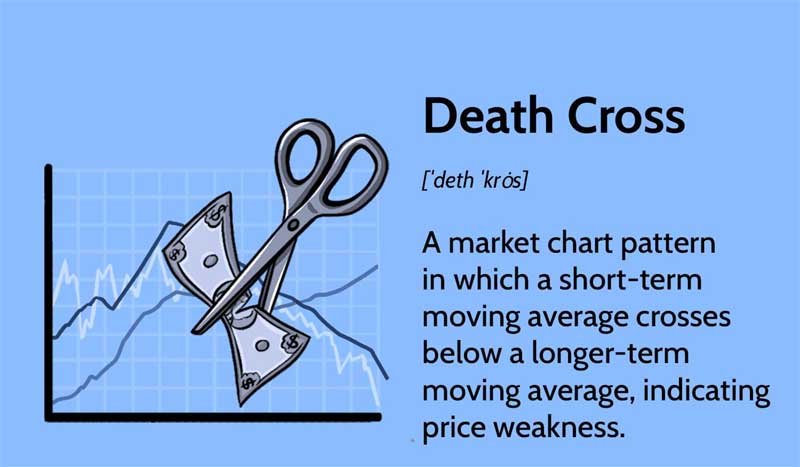
A Death Cross is a bearish technical indicator that occurs when a short-term moving average (typically the 50-day) crosses below a long-term moving average (usually the 200-day).
This crossover suggests that momentum is shifting from bullish to bearish, indicating potential long-term downside for the asset — in this case, cryptocurrencies like Bitcoin, Ethereum, or altcoins.
In short:
When the 50-day moving average (MA) dips below the 200-day MA → It’s called a Death Cross.
Why the Death Cross Matters in Crypto
Unlike traditional markets, the crypto market is known for high volatility and emotional trading behaviors. That makes technical indicators like the Death Cross especially influential.
Here’s why it matters:
1. Signals Bearish Momentum
The Death Cross typically signals that selling pressure is increasing, and a downward trend may continue. It’s often seen as a warning sign for traders to reduce risk exposure.
2. Influences Market Sentiment
When major cryptocurrencies form a Death Cross, it often spreads fear across the market. Many investors view it as confirmation of a bear market phase or a prolonged correction.
3. Can Trigger Large Sell-offs
Since the indicator is widely followed, a confirmed Death Cross can lead to automated sell orders or panic selling — pushing prices lower temporarily.
4. Part of Market Cycles
It’s important to note that Death Crosses often appear after significant price drops. So, while they confirm bearish momentum, they don’t always mean the market will crash further.
Real-World Examples
-
Bitcoin (BTC):
Bitcoin formed a Death Cross in June 2021, when the 50-day MA crossed below the 200-day MA — followed by a notable dip in prices. -
Ethereum (ETH):
Ethereum experienced similar crossovers during market corrections, often signaling short-to-mid-term bearish phases before recovering.
How Traders Use the Death Cross
Traders don’t use the Death Cross in isolation — they often combine it with other indicators like:
-
RSI (Relative Strength Index) to measure overbought or oversold conditions.
-
MACD (Moving Average Convergence Divergence) to confirm momentum direction.
-
Support and Resistance Levels to identify possible reversal zones.
Pro Tip:
A Death Cross can sometimes be followed by a Golden Cross — when the 50-day MA moves back above the 200-day MA, signaling a potential bullish reversal.
Should You Worry About a Death Cross?
Not necessarily.
While the Death Cross is a bearish signal, it often lags behind price action. Many traders use it as a confirmation rather than a prediction of a trend.
Instead of panic selling, smart investors use Death Cross events to:
-
Reassess portfolio risk.
-
Look for buying opportunities at lower prices.
-
Monitor key support zones for trend reversals.
Conclusion
The Death Cross is a powerful crypto trading signal that reflects bearish momentum in the market. While it often sparks fear among investors, understanding its context and combining it with other indicators can help you make smarter trading decisions.
Remember — no single indicator guarantees future outcomes. In the fast-moving world of crypto, strategy, patience, and data-driven analysis are key to long-term success.
Death Cross crypto, Bitcoin Death Cross, crypto trading signals, moving averages crypto, bearish market crypto, technical analysis crypto, Golden Cross, crypto price trends, crypto indicators