







What Moves the Forex Market? 5 Key Influencing Factors
The forex market is the largest and most liquid financial market in the world, with trillions of dollars traded daily. Yet, many traders wonder: what actually moves currency prices up and down?
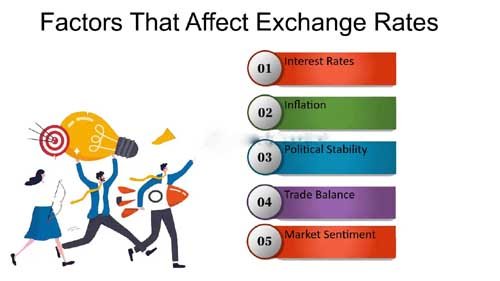
Unlike stocks or crypto, forex prices are heavily influenced by macroeconomic and geopolitical factors. In this guide, we’ll break down the 5 key factors that drive the forex market and why they matter for traders.
🔹 1. Interest Rates
Central banks, such as the Federal Reserve (Fed), European Central Bank (ECB), or Bank of Japan (BoJ), play a huge role in currency movements.
- Higher interest rates → attract investors seeking yield, strengthening the currency.
- Lower interest rates → discourage investment, weakening the currency.
Example: When the Fed raises rates, the U.S. dollar often strengthens.
🔹 2. Inflation Levels
Inflation measures the rise in prices within an economy.
- Low, stable inflation is usually positive for a currency.
- High inflation erodes purchasing power, often weakening a currency.
Traders watch CPI (Consumer Price Index) reports closely for clues about inflation trends.
🔹 3. Economic Data & Growth
Economic indicators directly influence forex prices, including:
- GDP growth → Stronger growth supports a stronger currency.
- Unemployment rates → High unemployment often signals economic weakness.
- Retail sales & manufacturing data → Give insight into economic health.
Currencies tied to strong economies generally perform better.
🔹 4. Political Stability & Geopolitics
Elections, government policies, and geopolitical tensions often spark volatility.
- Stable governments attract foreign investment, strengthening the currency.
- Political uncertainty or conflicts can trigger currency weakness as investors seek “safe-haven” assets like USD, JPY, or CHF.
🔹 5. Market Sentiment & Speculation
Sometimes, trader psychology moves the market more than fundamentals.
- Positive sentiment (risk-on mood) drives investors toward higher-yielding currencies.
- Negative sentiment (risk-off mood) pushes money into safe havens.
News headlines, global events, and even rumors can shift forex sentiment instantly.
🔹 Final Thoughts
The forex market doesn’t move randomly — it responds to clear economic, political, and psychological forces. By understanding these 5 key factors — interest rates, inflation, economic data, politics, and sentiment — traders can better anticipate market moves and make more informed trading decisions.