







USD vs EUR Forecast: Economic Trends You Should Know
The battle between the U.S. Dollar (USD) and the Euro (EUR) remains one of the most closely watched narratives in global forex trading. As the world’s two most traded currencies, the EUR/USD pair not only reflects monetary policies but also serves as a barometer of global economic sentiment. Traders, investors, and businesses alike keep a close eye on this pair because even small movements can influence commodities, equities, and international trade.
In this article, we’ll break down the key economic trends shaping USD vs EUR forecasts in late 2025 and what traders should watch in the months ahead.
1. Federal Reserve vs European Central Bank (ECB) Policies
Federal Reserve (Fed):
The Fed’s stance on interest rates continues to drive USD strength. Higher rates attract foreign capital, giving the dollar a bullish edge. However, a shift toward easing monetary policy could weaken the greenback.European Central Bank (ECB):
The ECB has been battling inflation in the eurozone, while also trying to support sluggish economic growth. If the ECB signals further tightening, it could provide a lift to the euro. Conversely, dovish guidance would pressure EUR/USD lower.
Key takeaway: The relative pace of tightening or easing between the Fed and ECB is the most important driver of EUR/USD.
2. Inflation and Growth Divergence
United States: Inflation has cooled from its peaks, but core prices remain sticky. Stronger U.S. job numbers and consumer spending continue to support the dollar.
Eurozone: Growth has slowed, especially in Germany and Italy, which are dragging down the bloc. If energy costs rise again, the euro could face renewed downside pressure.
Key trend: A widening growth gap favors USD strength, while narrowing differences support EUR recovery.
3. Geopolitical & Energy Factors
Oil & Gas Prices: Europe remains vulnerable to energy shocks. Any disruption in supply or sharp rise in prices typically weakens the euro.
U.S. Elections & Fiscal Policy: Political uncertainty in the U.S. can weigh on the dollar in the short term, but fiscal stimulus often supports growth and USD demand.
4. Technical Outlook for EUR/USD
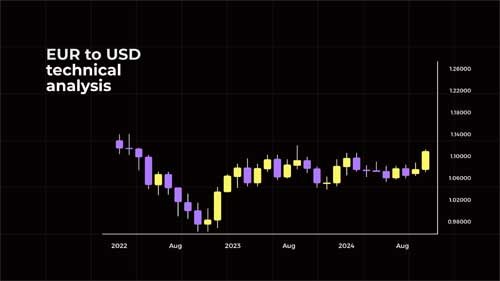
Support Levels: 1.0800 and 1.0700 remain crucial downside zones.
Resistance Levels: 1.0950 and 1.1050 are key upside targets if euro strength continues.
Momentum Indicators: RSI and MACD suggest range-bound movement unless a breakout occurs.
Short-Term Forecast: Choppy trading between 1.08–1.10 until clear policy divergence emerges.
Medium-Term Forecast: If the Fed turns dovish before the ECB, EUR/USD could rally toward 1.12. If growth in Europe worsens, expect a retest of 1.07.
5. What Traders Should Watch
Upcoming Fed meetings and rate statements
ECB press conferences for inflation guidance
U.S. jobs and consumer spending data
Eurozone GDP and German industrial output
Energy price volatility
Final Thoughts
The USD vs EUR remains a tug-of-war shaped by central bank decisions, economic performance, and geopolitical risks. Traders should expect volatility as both the U.S. and eurozone navigate diverging growth paths and inflation battles. Staying alert to data releases and technical levels will be key to capitalizing on opportunities in this major forex pair.